


POSSIBLE 2026 Miami
Cannes Cabanas + Energy, Spreadsheet Thinking, Zero Narrative Risk era
By Lynn Miteva


I’ve been to enough conferences across finance, art, business, and marketing to know the formula: panels that sounded important, language that felt safe, and conclusions that were exactly like last year’s.
POSSIBLE Miami 2026, which wrapped up yesterday at the Fontainebleau/Eden Roc, interrupted that—slightly.
It wasn't a revolution, but it was at least a change in tempo.


The Energy
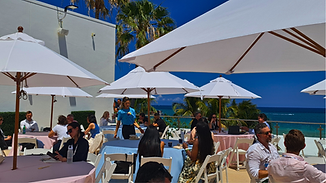
At the Fontainebleau, everything moved. Conversations spilled out of panels, meetings blurred into drinks, and the whole thing felt more like a live system than a scheduled program.
It borrowed the Cannes aesthetic—sun, density, soft chaos—but stripped out some of the self-congratulation.
People weren’t there to win awards. They were there to figure things out, or at least look like they were.
The energy was practical. Which, in this context, felt almost rebellious.



The AI Everywhere Effect
AI was everywhere. On stage, in side conversations, in pitches that started confidently and ended somewhere between ambition and speculation.
Some of it was grounded. A lot of it wasn’t.
It felt like AI had officially replaced “synergy” as the industry’s most flexible word—used more as a signal of relevance than a sign of understanding. It was like upgrading the engine and keeping the same destination.
AI on top of outdated thinking is still outdated thinking.

The Fight Club Moment
The "Digital Fight Club" showdown was easily the most refreshing part of the entire week. No barriers, no scripts, and zero polite nodding.
Instead of a mind-numbing panel of five people in identical quarter-zips agreeing with each other for 30 minutes, we saw real sparring on stage.
There were no moderators performing "neutrality" and no five-person agreement disguised as a discussion. Just raw conflict over whether agencies would actually survive AI or if they were already dead. It was sharp, a bit uncomfortable, and immediately more useful than almost anything else on the agenda.
It proved a point: when people stopped presenting and started arguing, everything woke up.


The Creative Gap: The Old Guard’s Blind Spot
Here’s the part no one said out loud: for a marketing event, there was almost no actual creativity.
Plenty of talk about “storytelling,” but the center of gravity stayed with the old guard in the biggest cabanas—still pushing the same interruptive ads people have ignored for decades.
The tools changed. The output didn’t.
Spreadsheets became LLMs, and the result is just more efficiently ignored. AI-powered indifference.
We’re supposedly in a creative economy, yet nothing felt immersive, cinematic, or worth stepping into.
The tech moved forward. The imagination didn’t.
The Take
POSSIBLE was a good event—well run, high energy, and better than almost anything else on the circuit. But it was a perfect snapshot of the current state of play:
-
AI was everywhere.
-
Understanding was uneven.
-
Creativity stayed… pending.
Kudos to the organizers for a great show.
Now, if the Old Guard could just get the memo that the audience has already changed the channel, we might actually get something worth watching


